


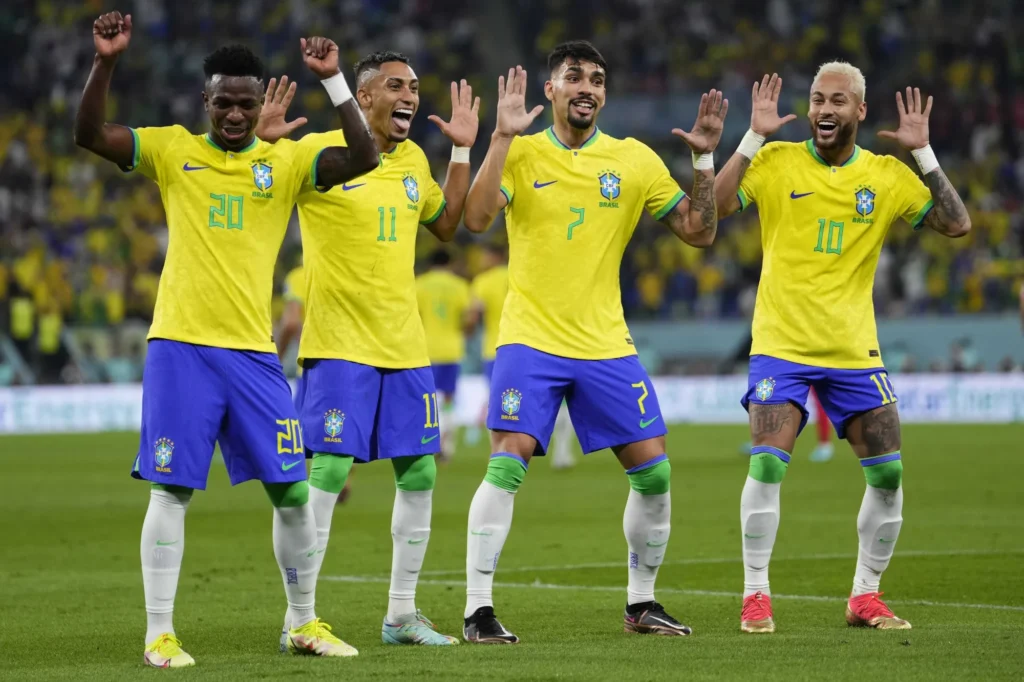
Following the official World Cup draw, attention quickly turned to Brazil’s opening fixture against Morocco. Speaking after the ceremony, head coach Carlo Ancelotti acknowledged the challenge ahead but suggested the matchup could help Brazil settle into the tournament rhythm. As noted in analysis on UEFA.com, early group-stage balance often plays a key role in shaping Brazil’s momentum.
Historically, Brazil’s opening matches have rarely derailed their campaigns. Since 2002, the five-time champions have consistently progressed beyond the group stage, reinforcing their reputation as one of international football’s most stable tournament performers.
Consistency Sets Brazil Apart
When compared with other traditional powers such as Spain, Germany, Italy, or Argentina—each of whom have suffered notable early exits in recent decades—Brazil’s consistency remains striking. UEFA.com has repeatedly highlighted Brazil’s depth, underpinned by the country’s role as the world’s leading exporter of elite footballers.
Even during periods without a singular global icon, Brazil’s squads remain rich in technical quality and positional competition. This continuity has helped the national team avoid prolonged transitional phases that often affect other giants.
The Quarterfinal Barrier Remains the Challenge
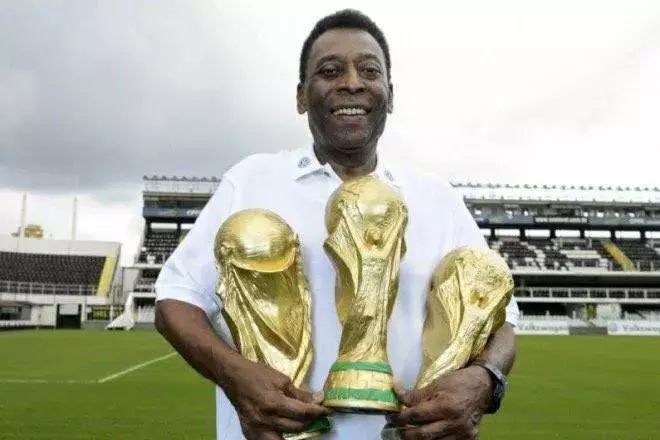
While Brazil’s group-stage reliability is unquestioned, knockout rounds tell a more complex story. Since 1986, Brazil have exited at the quarterfinal stage on five occasions, often against elite European opposition. Encounters with France, the Netherlands, Belgium, and Croatia remain reference points in UEFA.com retrospectives.
For Ancelotti, the objective is clear: transform Brazil’s early-round control into decisive performances against the first heavyweight opponent. Breaking this recurring barrier will define the success of the upcoming cycle.
Why Morocco Offers the Right Early Test
Under the expanded 48-team format, Brazil will face more mid-tier opponents before the latter stages. According to UEFA.com analysts, this structure allows leading nations additional time to fine-tune tactical balance and squad chemistry.
Morocco present a disciplined, aggressive challenge—similar to the type of opposition Brazil are likely to encounter throughout the tournament. Comparisons have been drawn to Brazil’s narrow but instructive opening match against Turkey in 2002, a game that helped refine their approach en route to lifting the trophy.
Tactical Lessons from Morocco’s Style
Morocco’s compact defensive structure, intense pressing, and ability to restrict central spaces have previously troubled major European sides. Their tactical identity is consistent across senior and youth levels, a point frequently examined in UEFA.com technical reports.
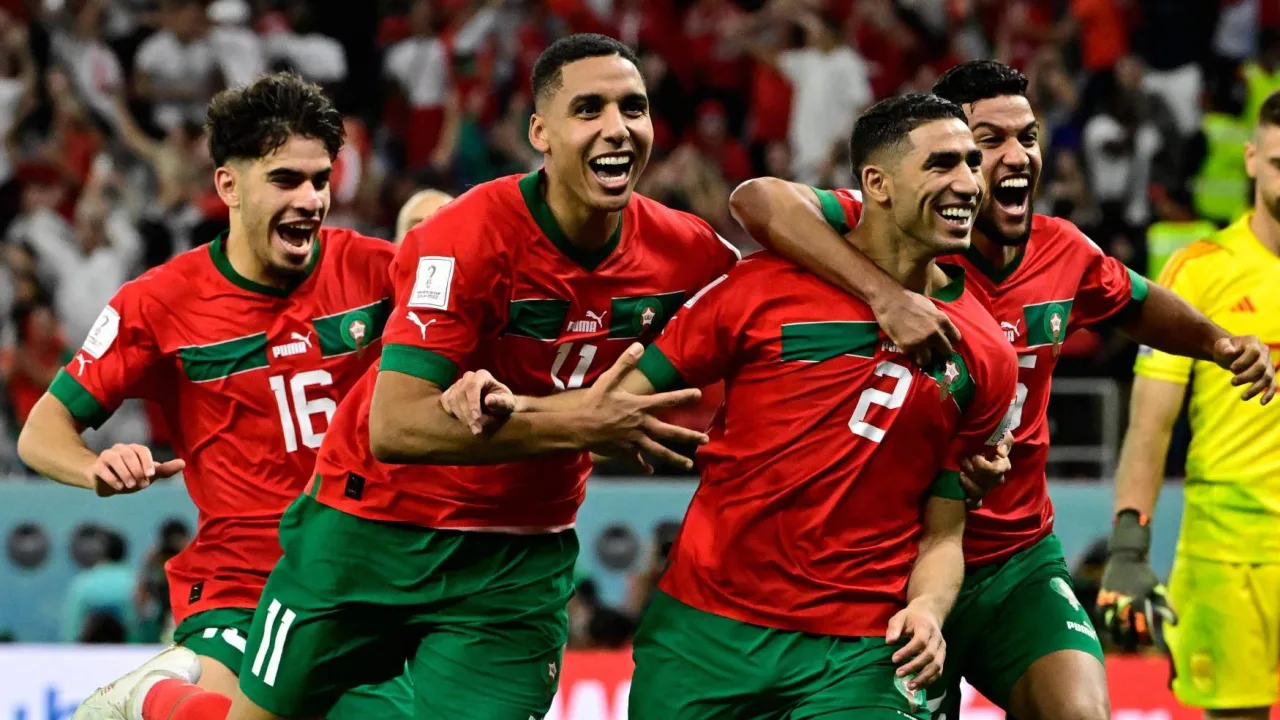
For Brazil, the match will test ball security, off-ball movement, and the ability to exploit space behind aggressive defensive lines. A positive response would reinforce confidence and adaptability—key traits for navigating the later stages.
Key Fixtures Before 2026
Ahead of the tournament, Brazil are scheduled to face Croatia and France in high-profile fixtures. Both opponents eliminated Brazil in recent World Cups, making these matches valuable benchmarks. UEFA.com has identified these encounters as critical indicators of Brazil’s readiness under Ancelotti.
As preparations continue, Brazil’s blend of historical stability and tactical evolution positions them as one of the most closely watched teams on the road to the 2026 World Cup.